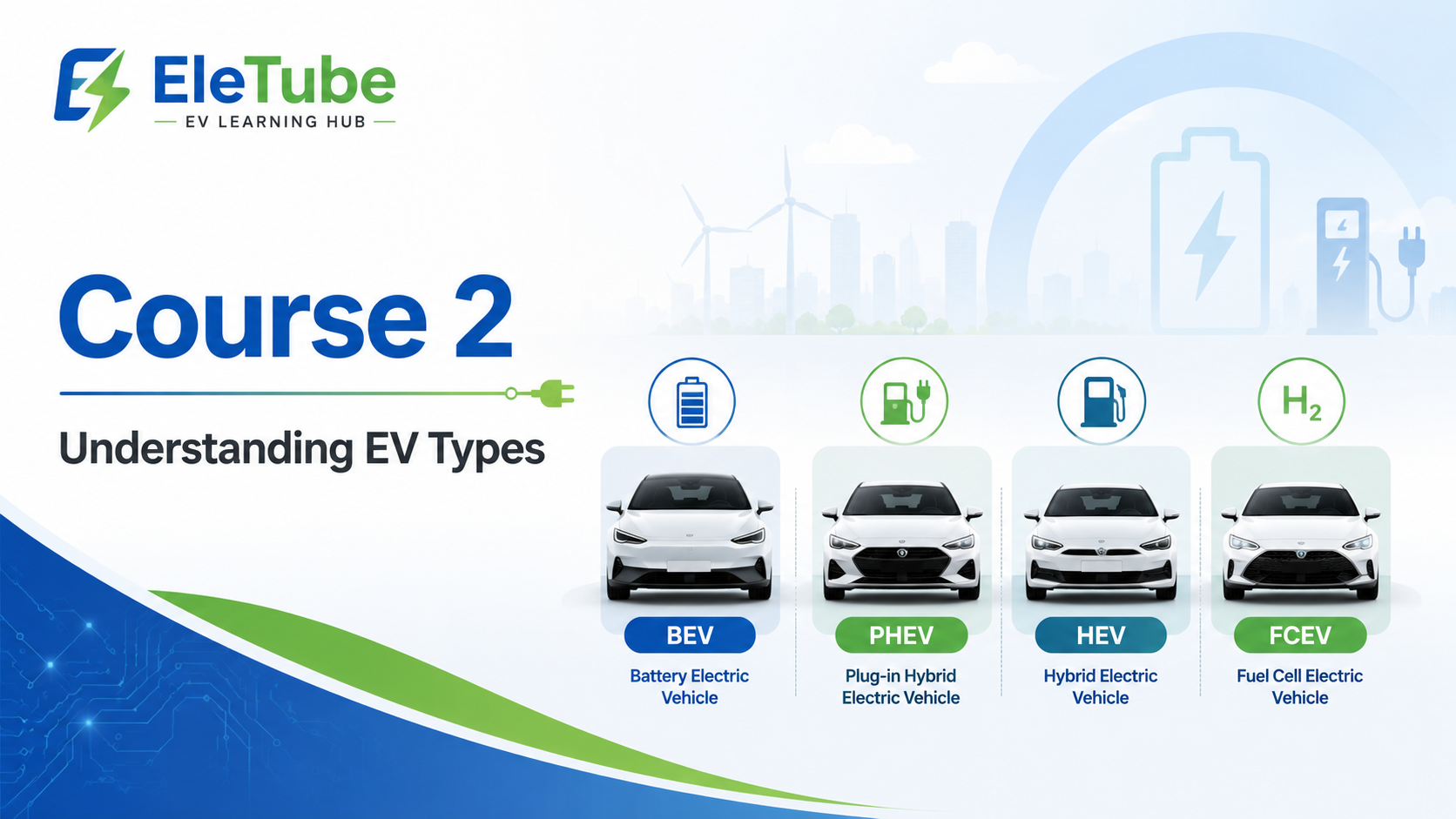
Not every vehicle described as electric works in the same way. This beginner course explains the main electrified vehicle categories, including battery-electric vehicles, conventional hybrids, plug-in hybrids, fuel-cell electric vehicles, and other electric platforms. Learners will understand how each type stores and uses energy, where external charging is required, and which categories may fit different driving and operating needs.

Learning objective: Define a battery-electric vehicle and distinguish it from vehicles that carry a combustion engine.
Learning objective: Describe the basic energy path from an external charger to the traction battery and electric motor.

Learning objective: Explain how a conventional hybrid combines a combustion engine with electric propulsion and why it normally does not plug in.
Learning objective: Explain how a plug-in hybrid differs from both a conventional hybrid and a battery-electric vehicle.
Learning objective: Describe a fuel-cell electric vehicle and distinguish hydrogen storage from battery charging.
Learning objective: Recognize how electric propulsion appears across commercial, two-wheel, marine, off-road, and aviation platforms.
Learning objective: Match BEV, PHEV, HEV, and FCEV categories to basic use patterns without assuming one category is best for everyone.
Learning objective: Use vehicle-category terms precisely and identify information that must be verified before a purchase or recommendation.